Coffee from the
Seed to your Cup
November 07, 2023
Coffee from the Seed to your Cup
Have you observed that an increasing number of individuals are beginning to express curiosity about where their coffee comes from? The Specialty Coffee movement and the evolving sophistication of the coffee business are directly responsible for this renewed interest.
Because we now have access to higher-quality coffee, coffee aficionados like us are beginning to identify the types of coffee we prefer. For this reason, we are beginning to wonder, “Where does this coffee come from? “Which kind of bean is it? Is it a Robusta or an Arabica?
1. The Seed
Similar to wine, only a few latitudes are suitable for coffee trees to grow and yield premium beans. This region, referred described as “The Bean Belt,” is found between 25° North and 30° South on the equator.
Compared to Robusta, Arabica is a more sensitive plant that requires more attention and softer temperatures. It thrives at high altitudes in soil that is rich in minerals. Conversely, Robusta, true to its name, is a more robust and hardy plant that thrives in warmer regions and requires less elevation than Arabica.
We drink coffee, as you may know, and it comes from a fruit called a “Coffee cherry.” It contains a seed that undergoes a number of transformations before becoming our beloved Coffee.
The seed is also referred to as a “Coffee Bean,” and depending on the variety (Arabica or Robusta), it can be light green or occasionally yellowish in color. As you can see in the following image, Arabica and Robusta beans differ slightly in size and shape; Arabica is slightly longer and oval-shaped, while Robusta is smaller and rounder.
2. The Trees
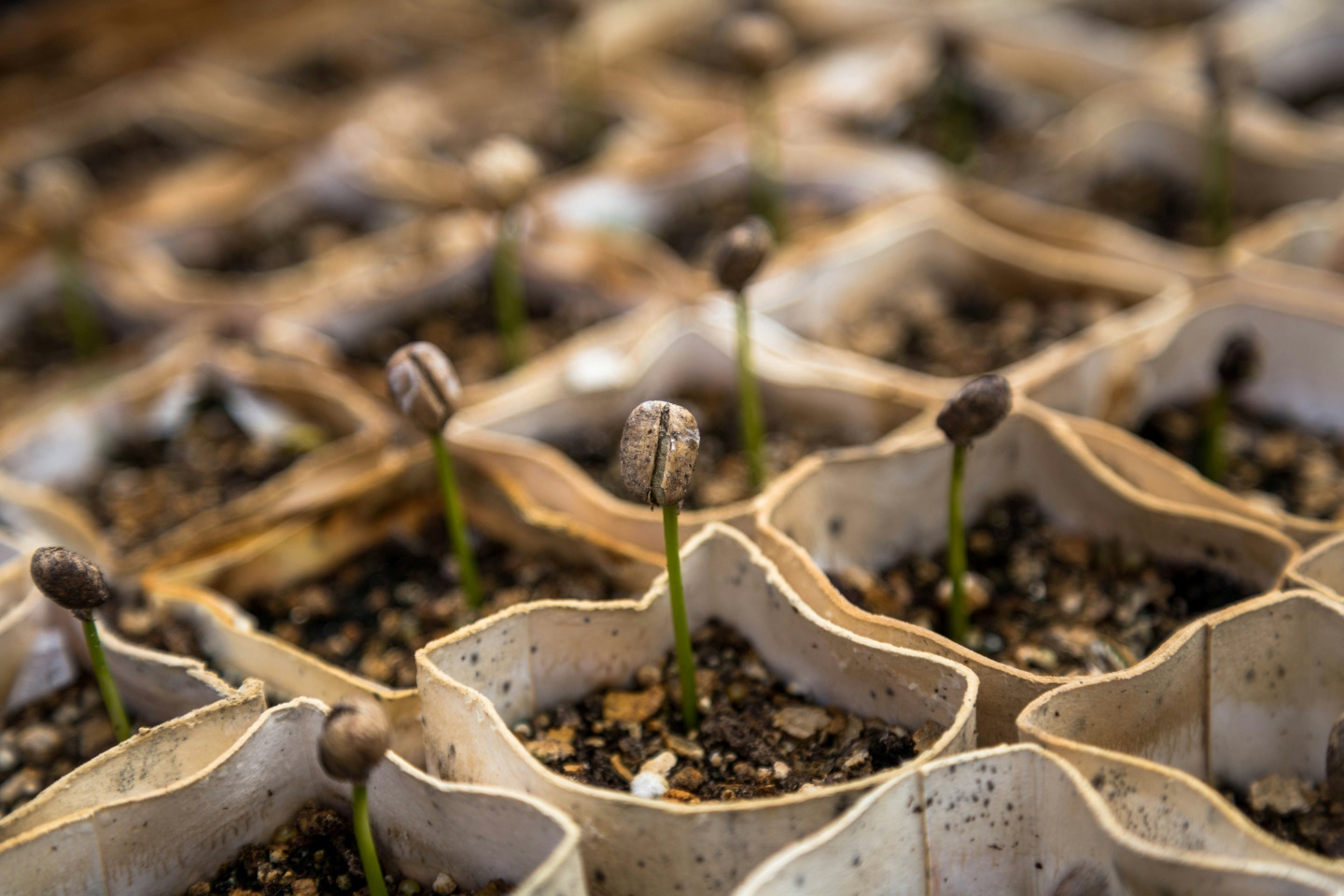
The coffee bean is, as mentioned earlier, a seed. It can be used to grow coffee trees just like any other seed, but only when processed (pulped, roasted, and ground) is it used to make coffee.
In nurseries with shade and specialized growing conditions, coffee plants are often started as seedlings and grow into robust, healthy plants. Until they become strong enough to be planted, they will be watered and protected from the weather. Before being moved to their permanent location, coffee seedlings might spend up to 15 months in a nursery.
Compared to Robusta, Arabica is a more sensitive plant that requires more attention and softer temperatures. It thrives at high altitudes in soil that is rich in minerals. Conversely, Robusta, true to its name, is a more robust and hardy plant that thrives in warmer regions and requires less elevation than Arabica.
Typically, planting occurs during the rainy season, which keeps the soil moist and pliable while the roots of the plant firmly establish themselves.
A newly planted coffee tree often takes up to 4 years to begin producing fruit (Coffee Cherry).
3. The Cherry
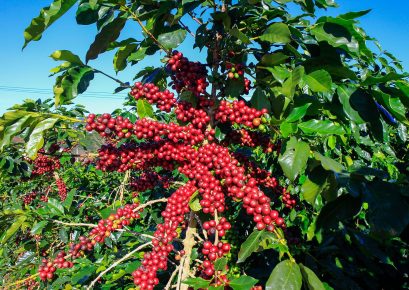
The coffee cherry is a complicated fruit composed of various elements that come together to form the green coffee bean that is used to make coffee.
Before the cherries begin to form, the coffee tree will bloom and drop flowers. Coffee cherries require nine months to reach full maturity and be ready to be harvested.
When fully ripe, coffee cherries can turn bright red, orange, or yellow, depending on the varietal. They begin life as green.
Ever pondered the flavour of a coffee cherry? There’s a subtle difference in flavour from the beverage.
Due to the various procedures that coffee beans go through, even if skilled farmers may identify the variety simply by tasting the cherry, the flavour of the beverage is significantly different from the cherry.
Although the flavour varies according on the kind, they are always as sweet as honey. If the process is done correctly, some of the characteristics will be transferred to the beverage. Some of them taste like mangoes, some like berries, and some like herbal.
4. The Harvesting
Harvesting can be divided into two basic categories: stripping and selective picking.
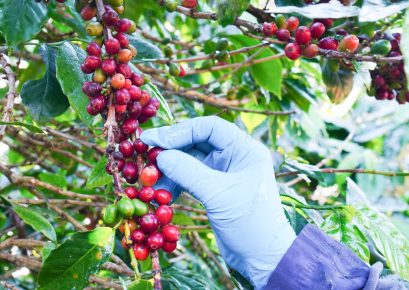
- Selective picking – The most common technique for producing premium coffees is selective picking, which is only done by hand. Sophisticated cultivators select just fully ripe cherry, leaving the others to develop further.
- Stripping – Large-scale harvesting machinery, automated strippers, or manual labour can all be used for stripping. Unlike selective picking, which prioritizes speed and low cost over quality, this approach does not take into account the cherry’ level of maturity. As a result, the cherries from all stages of maturity will need to be separated to prevent mingling.
5.The Processing
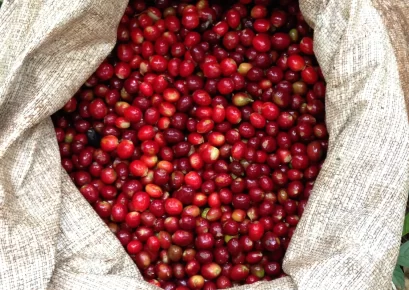
After they are picked, coffee cherries are processed using three major methods: washed, dried (natural), and honeyed.
- Washed – Using water as a washing agent, the fruit and bean are separated as thoroughly as possible using the washed method. By separating the fruit from the bean, the bean takes centre stage in this approach, which is an excellent way to experience the true qualities of a coffee from a single origin. This method’s main disadvantage is that it wastes a lot of water, however many growers are experimenting with new ways that drastically cut down on water use and maximize yield.
- Dried (natural) –This ancient method also referred to as the “natural process” was initially employed in Ethiopia and has been around for millennia. This process involves letting coffee cherries dry in the sun before removing the fruit and bean. This method’s drawback is that some low-quality producers combine unripe and ripe fruits together, which results in inconsistent flavour and is generally regarded as low-quality.
Unlike the washing approach, which requires an investment, this method is more economical. To ensure a proper drying process, there must be adequate sunlight during this time. That is the only requirement. Because part of the cherry’s sweet and fruity properties is absorbed by the beans throughout the drying process, the dry technique can yield some really unique notes of flavours and fragrances when done properly. The fact that this procedure uses only sunlight and no other raw materials makes it the most environmentally friendly of the bunch, which is another advantage.
- Honeyed –This procedure, which utilizes water to remove most of the fruit but leaves the mucilage, or “honey,” and then sets it out to dry in the sun, is a halfway step between dry and washed. Through this method, the fruit’s sweetness and the bean’s inherent characteristics can be balanced.
Costa Rican coffees are often prepared using the honey process, leading to the development of several subcategories (yellow, red, golden, black, and white).
6.The Roasting
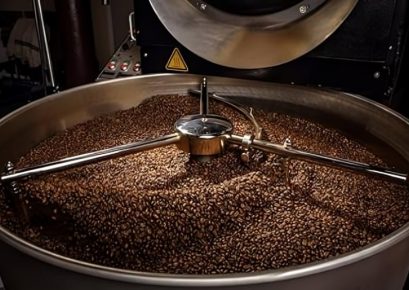
The roasting procedure gives our cherished beverage its characteristic dark hue. Because roast masters must experiment but also have a keen understanding of how each coffee will respond at different temperatures, we believe that this process is 50% science and 50% art. Since a few seconds or degrees can distinguish an excellent coffee from a mediocre one, this stage is essential to creating a superb beverage.
Achieving the ideal roast requires a great deal of experience, precise timing and temperature management, and the ability to identify when the coffee is at its optimum.
Types of Roasts –Light, medium, and dark roasts are the three primary varieties; each has numerous subcategories.
- Light Roast – 180°C to 210°C is the roasting temperature range that produces light roasts. Coffee beans will explode like popcorn at 205°C; this is known as the first crack, and light roasts typically don’t go past it.
Light roasts retain most of the caffeine in the bean, have a lighter-brown hue, and are more acidic than other roasts.
- Medium Roast – 210°C to 230°C is the roasting temperature range that produces medium roasts. There will be a second crack in the darker range of the medium roasts, but they usually don’t go any darker than that.
Medium roasts are less caffeinated than lighter roasts, have a medium-brown hue, and strike a balance between flavour and body.
- Dark Roast – You may obtain dark roasts by roasting at temperatures between 230°C and 250°C. Usually, they go past the second crack.
Compared to other roast varieties, these roasts are practically black in colour, have a stronger body and smoky flavour, and contain less caffeine.
7. The Grinding
Coarse, medium, and fine are the three primary varieties of coffee grinds; each has numerous subcategories.
Ask your reliable barista what kind of grind is required for your drink; they will be able to inform you as the type of grind will depend on the brewing technique being employed.
Recall that you need to get the proper kind of grind if you are brewing at home. Alternatively, you might purchase whole beans and grind them yourself. This way, you can experiment with different grind variants until you discover the one that works best for you, and you can be certain that the grind is appropriate for your coffee maker.
8.The Brewing
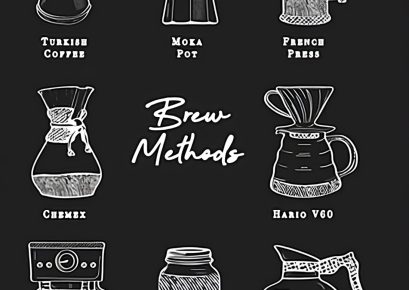
There are many different brewing methods which you can choose depending on the beverage you desire, there are four brewing categories:
- Pour Over – Using this process, coffee is filtered while hot or cold water is being passed through it.
- Steeping – It is sometimes referred to as the immersion method and involves sifting the coffee grinds from the wet coffee after adding hot water to the mixture.
- Pressure – This coffee-brewing technique makes use of air pressure.
- Boiling – The oldest method in the book, this one involves boiling water with coffee, as you would have guessed, to make the beverage.
That’s a comprehensive overview of the coffee’s trip from the seed to your cup. The next time you sip coffee, keep in mind that the beverage has come a long way, both in terms of distance travelled and processing time.
Tags
Coffee
Health


Latest Posts
November 07, 2023
Coffee from the Seed to your Cup

August 24, 2023
Some Facts about Macadamia Nuts

June 22, 2023
The coffee roasting process

SOIL AND SOUL ENTERPRISES – SOLE PROPRIETORSHIP L.L.C. is not just a company; it’s a commitment to a greener, more ethical world. Established in the heart of Abu Dhabi Emirate under the esteemed license from the Department of Economic Development, our mission is clear – to bring you the finest, sustainably sourced agricultural products from around the globe.